
For Theo, the Stories Around the Music Are Part of the Experience
From Berlin recording sessions to childhood Michael Jackson memories, Theo’s picks reflect a listener who experiences music through the artists, places, and stories that shaped it.
Spend enough time reading Theo's (@kaiser_rec) answers and a pattern starts to emerge. He rarely talks about a song, album, or artist without eventually talking about the circumstances around them. A favorite album leads to the city where it was recorded. A great track turns into a story about the people who made it. Even a record he's loved for years becomes an excuse to dig deeper into the moment in time that produced it. Music is at the center of everything, but it's rarely the whole picture.
Theo’s personality shows up throughout the May 26 to 30 prompts. One answer starts with a monochrome album cover and opens the door to a much bigger story. Another prompt focuses on a rock song that means more because of the circumstances surrounding its creation. Through the other prompts, there's also an artist he spent years not fully understanding, an early musical memory that resurfaced decades later after being too painful to revisit, and a band whose live performances still stand as the benchmark against which he measures everyone else.
Which monochrome album cover do you love?
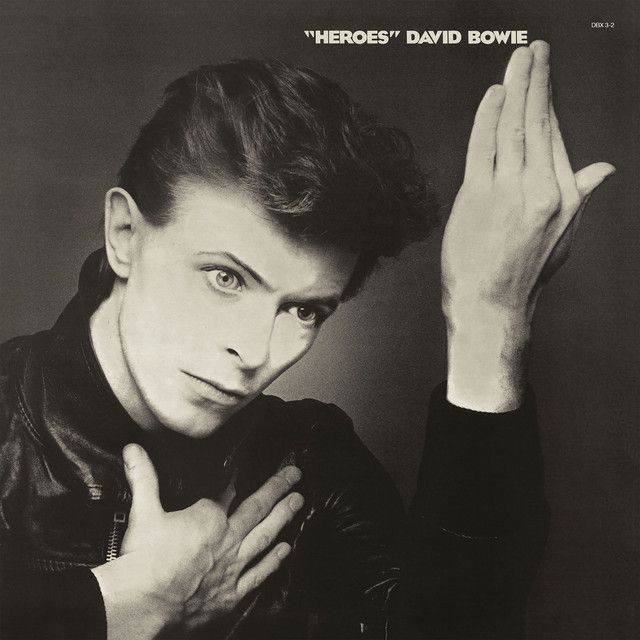
I have two favorites: The first is David Bowie’s Heroes and the other is Iggy Pop’s first solo album, The Idiot. But for this round, I’m choosing Heroes—and not just because it was recorded in my hometown of Berlin, but because it features THE most iconic album cover—photographed in Japan by Bowie’s friend and longtime collaborator Masayoshi Sukita—ever and stands as one of his most famous works!
Recorded in West Berlin in the summer of 1977, the album reflects the cold atmosphere of the divided city and David’s state of mind at the time—specifically, his journey of overcoming his nasty drug addiction and rediscovering himself as an artist.
While its predecessor, Low (the first album of the legendary Berlin Trilogy) possessed a relatively dark tone, the sound of Heroes is a perfect blend: more upbeat and lighthearted, yet still retaining a hint of desperation in Bowie’s vocals. I admire his entire Berlin era, but Heroes will always hold a special place in my heart because it is my ultimate comfort album; songs like “Heroes” (both the German and English versions), “Joe the Lion,” “Beauty and the Beast,” and “The Secret of Arabia” never fail to lift my spirits. He even recorded the title track in three different languages: English, German, and French. Personally, I absolutely LOVE the German version; when singing it, he sounds so theatrical and desperate, yet simultaneously full of hope.


Which rock song are you currently vibing to?
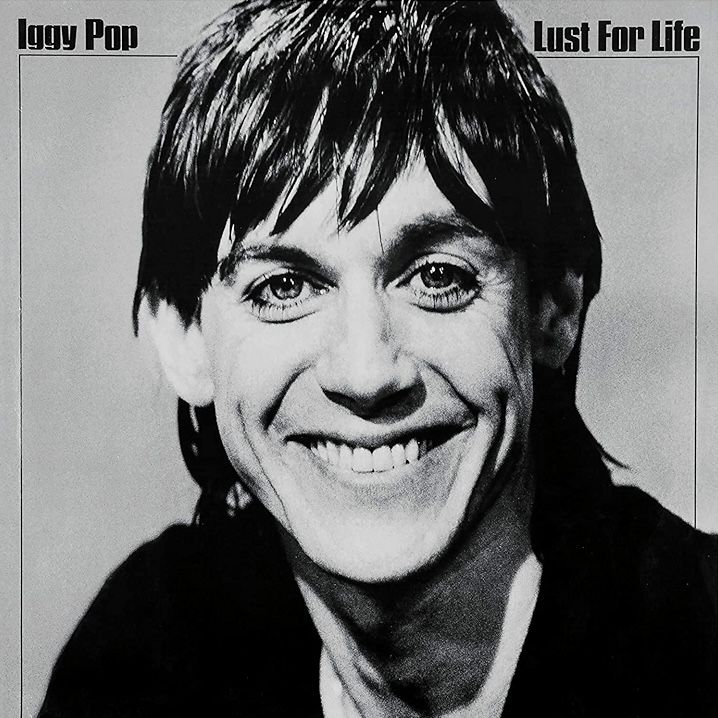
That is a truly difficult question. I listen to so many songs from the rock genre every day that I find it hard to pick a single favorite. However, lately, I’ve really been enjoying “Some Weird Sin” by Iggy Pop, released in 1977! Incidentally, a year earlier, he and David Bowie had moved to West Berlin—into their shared apartment at Hauptstraße 155—in an effort to overcome their drug addictions and finding new inspirations as artists. It’s from Iggy’s second solo album, and much like Bowie on Heroes, Berlin—and its unique political situation at the time as a divided city—played a major role in it.
In April 1977, Iggy went on tour with his band—consisting of brothers Tony Fox Sales (bass) and Hunt Sales (drums), guitarist Ricky Gardiner, and Bowie on keyboards—he regrouped with the latter in Berlin to record his next solo album Lust for Life! The recording sessions took place from May to June at the legendary Hansa Tonstudios in Berlin—located right near the Wall—with Bowie’s rhythm section: Carlos Alomar, George Murray, and Dennis Davis. It was in these very studios that Bowie would later record and lay down the vocals for his own album, Heroes.
In contrast to Iggy’s first solo album, The Idiot—released in March of that same year and co-produced by Bowie—Lust for Life features a significantly more confident and carefree Iggy (something wonderfully reflected in Pop’s grinning expression on the album cover), as well as a selection of more upbeat songs. Alongside his more famous tracks—such as the title track and “The Passenger”—the album also includes ballads like “Fall in Love with Me” and “Success.”
But why do I love “Some Weird Sin” so much? According to Iggy, it is based on a poem he wrote himself during a dramatic period in his life—a time filled with change and a profound sense of loss of control. After his band, The Stooges, disbanded in 1974, he found himself unable to control his drug use; he checked himself into the psychiatric ward at the UCLA Neuropsychiatric Institute in an attempt to get clean. Bowie later discovered the poem in Iggy’s room in Berlin and urged him to set it to music and release it as a song. For me, it is his vocals and the lyrics that—on the one hand—wonderfully reflect his emotional state at the time, yet without coming across as sad or depressive. It sounds very swaggering and, thanks to Tony Fox Sales and Hunt Sales, boasts a phenomenal sound!
You can’t imagine how happy I was when Iggy played it live at his Berlin concert last year.

Which artist did you not get at first?
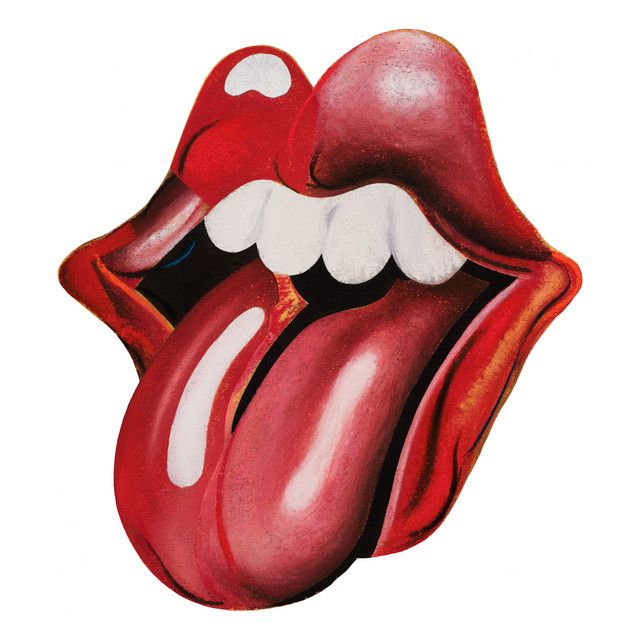
Unfortunately, we are talking about a band that will no longer be touring—and the last time they played in Berlin, I wasn’t near as big a fan of them as I am today. I am referring, of course, to that British group—and the longest-running band in history: The Rolling Stones!
It wasn’t until 2023 that I began to delve deeper into their discography when they announced their LP Hackney Diamonds. It wasn’t “love at first sight” for me, as I simply didn’t like them; my Millennial brain ALWAYS associated their music and style with an older audience. Blues-rock and the seemingly antiquated, repetitive themes of the 1960s—sex, alcohol, drugs, and women—didn’t really manage to captivate me. There were only a few mainstream-rock-influenced songs—such as “Start Me Up,” “Angie,” “Beast of Burden,” and the then-new single “Angry”—that managed to catch my attention. My very first second-hand record was a cheap copy of Sticky Fingers, which I found at a record fair in 2023; it offered me a deeper glimpse into the world of the Stones—beyond the familiar tracks one knows from the radio.
I played the record every day, and it felt as though my inner resistance was gradually dissolving; their albums and songs from the 70s thus became the spark for my Rolling Stones obsession—a passion that endures to this day. Whether it’s Charlie Watts’ thunderous drumming on “Brown Sugar,” the guitar work of short-term member Mick Taylor on “If You Can’t Rock Me,” Mick Jagger’s high-energy vocals on “Shattered,” Keith Richards’ wild guitar playing on “Tumbling Dice,” Ron Wood’s first contribution as a new member in 1976 on “Hey Negrita,” or Bill Wyman’s bass playing in general—the Stones offer music to suit every taste. Of course, I also appreciate their work from the 90s—such as Voodoo Lounge—as well as the 60s album Beggars Banquet and A Bigger Bang from the 2000s; however, my personal favorite era (and, in my opinion, the band’s absolute heyday) falls between 1971 and 1981. Nevertheless, I am absolutely excited about their upcoming new album, Foreign Tongues!

Which was the first song you heard by your favorite artist?
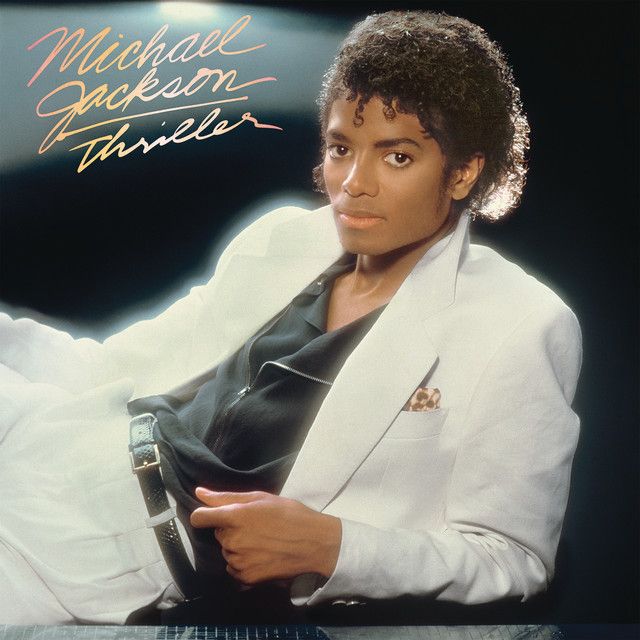
I can’t remember exactly anymore—it must have been easily 20 years ago—but I’d guess it was either “Beat It” or “Billie Jean” by Michael Jackson. I spent a long time thinking about which artist to choose for this question; naturally, David Bowie was the very first person who came to mind, but I’ve only been a huge fan of his for a few years now. As a child, my very first major influence in terms of music and fandom was Michael Jackson. When I was about nine years old, I loved to crawl into the papier-mâché playhouse in my bedroom with my parents’ CDs and listen to all the songs from the 80s. Even as a child, I was a fan of that era and its music (something that was later reflected in the music on my MP3 player), and over time, I developed a deep passion for Michael Jackson and his famous albums like Thriller, Bad, and Dangerous.
As the years went by, new platforms like YouTube emerged, allowing me not only to listen to his songs but also to watch all his music videos—I almost shat my pants watching Thriller—and live performances. Then, I slowly began teaching myself his dance moves and trying to imitate them. When Michael announced his big comeback tour, This Is It, in 2009, I was twelve years old and absolutely beside myself with excitement; I was so thrilled at the prospect of one day getting to see my idol perform live in Berlin. Michael tragically passed away just over two months after that announcement and I was utterly devastated and completely crushed—more than I ever thought possible.
For many years, I couldn’t even bring myself to listen to his music—let alone feel any joy while doing so—because my mind would immediately drift back to his tragic fate. Two weeks ago—after finally working up the courage (and thanks to videos constantly popping up in my feed)—I went to see the new biopic. Immediately afterward, I stayed for the very next screening, because that first viewing had been such an emotional experience for me. I suddenly felt, in an instant, just like my 9- or 12-year-old self again. My “inner child” truly resurfaced, and at times, the film—along with the pitch-perfect portrayal by his nephew, Jaafar (which I believe touched so many)—proved to be an incredibly emotional journey for me.
I am all the more delighted that Michael’s legacy and life’s work are being celebrated so vibrantly worldwide through this film and now having a whole new generation of fans. It seems that many others of my generation felt the same way—that through this movie, they rediscovered a connection to their own “Michael Jackson phase” from childhood. Now, after all these years, I have finally rediscovered a genuine connection to his music. Since seeing the film, I’ve been listening to his entire discography on repeat, and I can feel my once-disappointed inner child suddenly rejoicing—allowing me to now blast his music at full volume, with a mix of pure joy and a touch of wistfulness, and dance along.

Which artist do you think puts on a great performance?
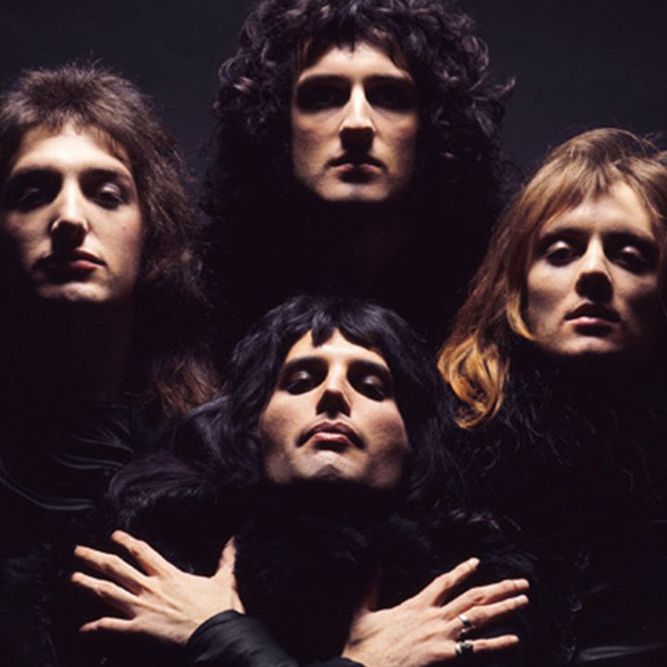
With all respect to the Stones or Bowie, for me—when it comes to “unforgettable performance and dedication”—Queen takes the number one spot. I actually discovered Queen relatively late, right in the middle of the pandemic. My very first record back then was A Kind of Magic, and naturally, I also stumbled upon the legendary Live Aid concert at Wembley Stadium in 1985—an event where, in my eyes, Freddie Mercury and the entire band cemented a massive place for themselves in music history. But regardless of which era or time period you look at, Queen always delivered absolutely brilliant performances—and not just thanks to their frontman, Freddie Mercury. Every single member of the band was simply incredibly talented, and interestingly enough, almost all of them were university-educated professionals.
My favorite era of Queen would have to be the period from 1977 to roughly 1982—a time during which three phenomenal live albums were recorded: Live Killers (recorded in 1979 in Frankfurt am Main, Germany, and Paris, France), Rock Montreal (recorded in 1981 at the Montreal Forum, Canada), and Live at the Bowl (recorded in 1982 in Milton Keynes, England).
The concerts at the Montreal Forum, in particular—which were scheduled specifically for the filming of the concert movie Queen Rock Montreal—held on November 24th and 25th, 1981, feature electrifying performances and high-energy vocals from Freddie. It was at these shows, too, that the collaboration with David Bowie, “Under Pressure,” was performed live for the very first time. The entire setlist is a killer mix of their classics such as “Bohemian Rhapsody,” “Killer Queen,” “Somebody to Love,” “Now I’m Here,” and “Keep Yourself Alive”—and newer tracks like “We Will Rock You,” “Let Me Entertain You,” “Crazy Little Thing Called Love,” “Another One Bites the Dust,” and “Flash.”

While reading Theo's answers, it's hard not to notice how often one thing leads to another. A song becomes an album. An album becomes a city. A city becomes a recording studio, a concert, or even a particular moment in someone's life… similar to how that kid who used to play in his papier-mâché playhouse with his parents’ CDs. Music is usually where the stories begin, but it’s never where it ends.
Maybe that's the reason why so many of his answers instead of feeling like recommendations, they feel more like invitations to go explore something for yourself. Dig a little deeper. Read another interview. Listen to the other album. Watch another performance. Find out what happened next, and who did what, and where. And maybe, just maybe, somewhere between the records, the stories, and all the history attached to them, you might even find a little bit of your reflection in them as well.
A vinyl collector who feels equally at home browsing record fairs, vintage furniture shops, and the discographies of Bowie, Iggy Pop, and other rock artists from the 70s and 80s.


