
Lindsay on The Monkees, Girl Tones, Led Zeppelin & more
From The Monkees and Led Zeppelin to Jack White and Zach Top, Lindsay’s picks reflect how her musical horizons have expanded over the years.
Lindsay grew up in a house where music was always playing, from traditional to modern country and 60s soul to rockabilly, disco, and more. The Monkees were her first favorite band, but it was Led Zeppelin that became the focus of her teenage years, shaping how she explored music and discovered new favorites. That eventually led to the discovery of The White Stripes, the band that opened the door to a wider range of genres and remains her favorite to this day.
Over the years, Lindsay has learned to let go of the rules she once set for herself as a music nerd, rediscovering her love of pop through Taylor Swift’s 1989 and finding a connection with Hayley Williams’s solo work. She joins us for the October 13-19 prompts to share the songs, albums, and artists that have shaped her listening, from the thrill of seeing The Monkees as a kid to the women-led rock she can’t stop playing lately.
Which song takes you straight back to your first concert?
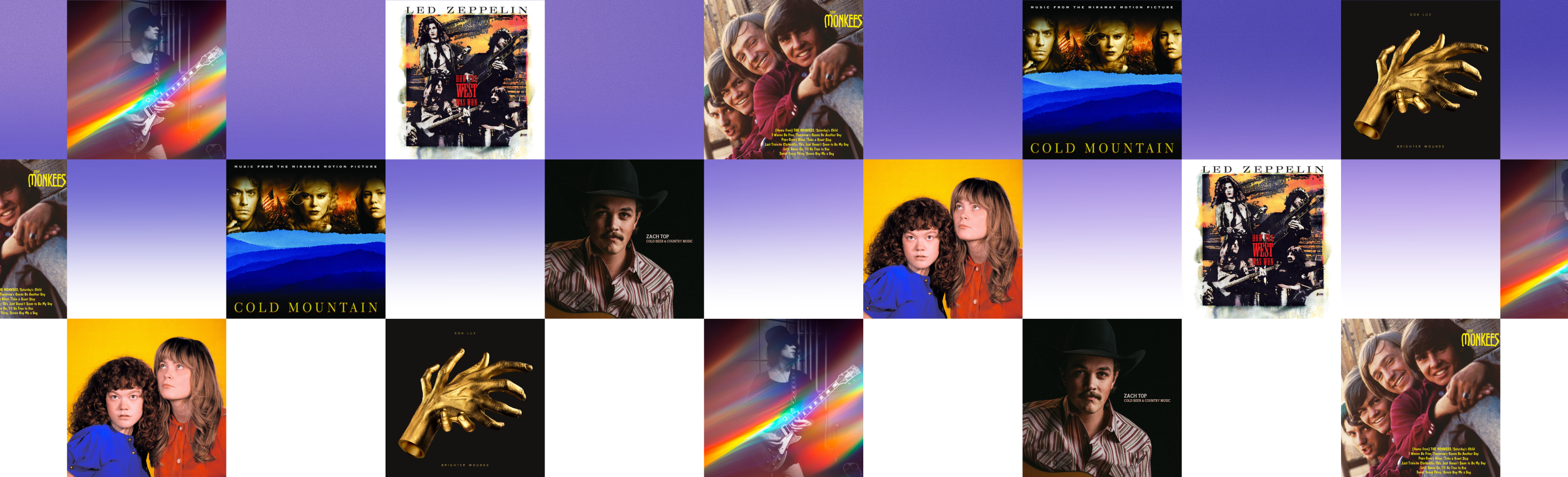
I was 8 years old when I became obsessed with The Monkees. They were my mom’s favorite childhood band, and when they reunited in the 90s, she recorded the specials, and soon I was asking my teachers every day if they knew who The Monkees were and getting merch for Christmas.
The next summer, she somehow talked my dad into driving the whole family four hours to see them live in Louisville. They opened with “Last Train to Clarksville,” and I distinctly remember freaking out, in the depths of hyperventilation once I heard those jangling opening chords. I was in the youthful disbelief of being in the presence of my favorite band. These were the same guys I watched on TV, whose CDs I played over and over! They were playing their songs! Sadly, Mike Nesmith decided to forego this tour, but I still had a great time.
I really don’t remember much else about that concert, which was evident when my mom sent me the grainy, 35mm point-and-shoot photos that were completely misaligned with my memory… but the feeling of electricity upon hearing those opening notes at a concert, the vibrating anticipation, the utter joy of experiencing live music stuck with me.


Which artist did you discover this year?
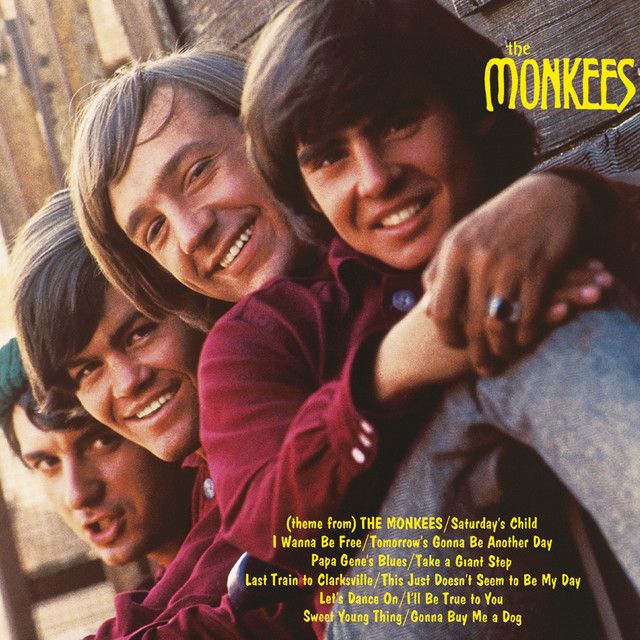
Women have been at the forefront of my listening this year. Is it the rage? (probably) Is it the fact that I’m constantly around men due to my job? Is it the fact that there is an unspoken revival of Riot Grrrl, where women are making some of the best music currently being released? All of the above, perhaps? So imagine my delight when I find a duo from Kentucky, just a couple of hours from where I grew up, making loud girl rock on the fringes of this new movement!
Girl Tones is a sister duo from Bowling Green, KY, whose debut album drops in November, but who have been at it for nearly a decade. They mix aggressive, distorted garage rock with a sweeter, bubbly pop side, which combine for some infectiously catchy tracks. I’m anxiously anticipating their album, produced by one of the guys from Cage the Elephant (another band-child of Bowling Green), and thankfully released on only one vinyl variant - reliable, dependable black wax.

Which track showed you a different side of your favorite artist?
With the clarity of hindsight, it was obvious Jack White had this in him. It was there on “Hotel Yorba” and it was there on the cover “Your Southern Can is Mine” and it was there on “Sugar Never Tasted So Good.” Roots music has always been part of his musical DNA. But maybe what it showed me was a different side of myself, too.
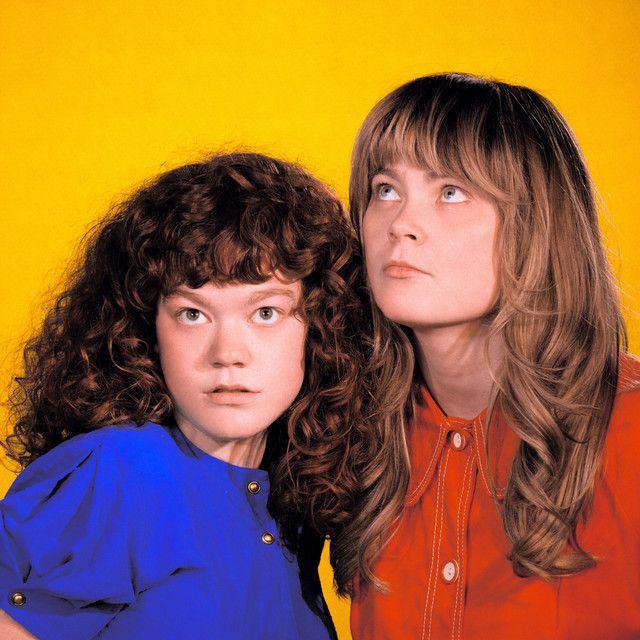
In any respect, I came to The White Stripes late, so I heard all of this out of order. My initial exposure was to the first, octave-divided notes of “Blue Orchid,” standing at a CD preview station at an FYE in 2005. The Cold Mountain soundtrack had been in the world for two years at that point, the “Jack-White-goes-country” headlines that accompanied Loretta Lynn’s Van Lear Rose for over a year. But all I heard was the blues, with the shrieking falsetto and distorted guitar and those drums. Country never once occurred to me.
A few weeks after I got into The White Stripes, I rented Cold Mountain from a Blockbuster, with a card I’d signed up for myself. The movie was set during the American Civil War, and Jack had a small role as a musician, in addition to a few features on the soundtrack. The songs were intended to be Appalachian folk music, but his only track that I found to really feel like traditional country was played on a mandolin during a campfire scene and didn’t get a massive soundtrack push.
It might be important to mention that at this time, in the early 2000s, the traditional country scene had experienced a massive surge due to the somewhat unexpected success of the soundtrack to O Brother, Where Art Thou? My parents and my parents’ friends and even my friends’ parents had it playing constantly, and frankly, I hated it. The Cold Mountain soundtrack tried to capitalize on this resurgence, with a lot of the same artists and producers, but never really achieved the same stratospheric success. Lightning in a bottle.
That said, this one song in particular showed me that Jack White, who had quickly become one of my favorite musicians, had a knack for the old-timey country that I’d spent years avoiding. This recording was just him, an acoustic mandolin, and a fiddle or two, which was a far cry from the electric guitar-playing maniac I’d become obsessed with, but I found it extremely compelling, reminding me of my grandmother who played piano, her fiddle-playing brothers who moved to Detroit for work, generations of American musical traditions that all came together in one scene that nobody paid any attention to. And with this, Jack White helped me reach two conclusions: that I did, in fact, love country music, I just had to come to it on my own terms, and that the oft-repeated musical axiom of “three chords and the truth” is appropriate for any genre, be it a folk ballad played around a campfire or garage rock that sounds like it was recorded in a masonry shed. I still listen to this song every Christmas.

What’s one live album you keep coming back to?
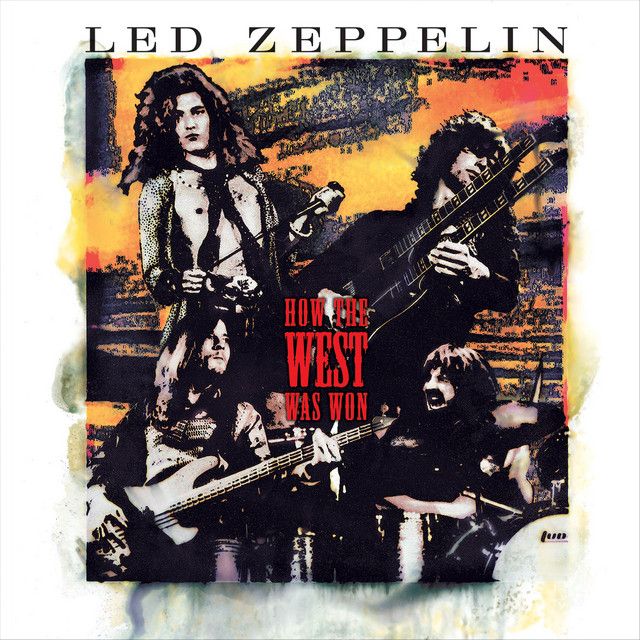
How the West Was Won was a latecomer to the Led Zeppelin canon. Released in 2003, over 20 years after the band called it quits, the album is taken from soundboard recordings of two 1972 California shows in LA and Long Beach. This is widely considered to be the band at its best, most on fire, between the release of Zeppelin IV and Houses of the Holy. The most Zeppelin that Zeppelin ever was.
This release is perfect for me because it really captures the “light and shade” of Zeppelin. The dichotomy of loud, reckless excess and beautiful, subtle restraint. Other releases may have multiple tracks that exceed 20 minutes, or an acoustic set in the middle, but How the West Was Won is the only one that has both. It also has all those special nuances of Zeppelin live performances that get referenced, like “remember laughter?” from “Stairway to Heaven.”
I especially love the performance of “Whole Lotta Love,” which includes a medley of rockabilly and blues classics, and I must insist that it’s the one from the 2003 CD. For the 2018 rerelease, which is also the master on streaming services, the medley was shortened due to royalty issues. It’s still fantastic (and the original CD medley was also shortened for royalty reasons), but it does make the old CD feel special in its own right.
The thing about Zeppelin is that every one of them was an extraordinary musician in his own right, and each one was also peak here. By the time of the 1973 shows captured in The Song Remains the Same, excess was just starting to turn into bloat. It’s subtle, but it’s there. How the West Was Won was just on the edge, a perfect portrait of the band at their finest.

Which album cover made you stop and look twice?
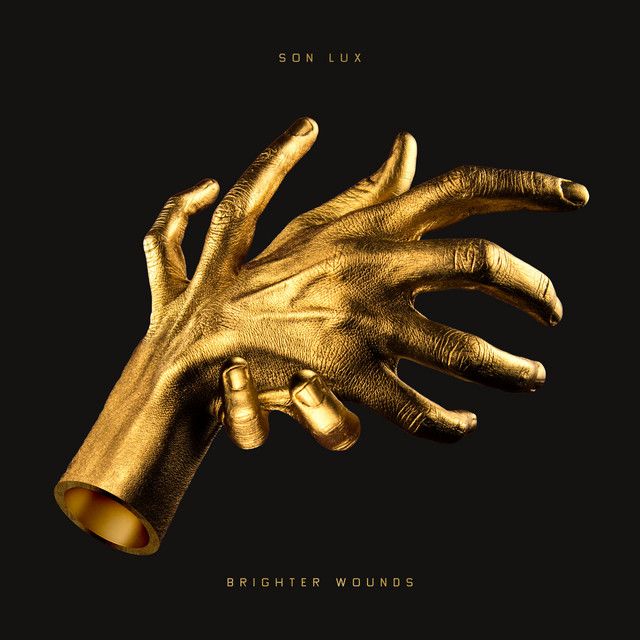
The cover of Son Lux’s 2018 release immediately came to mind. A pair of gold hands, one clutched and the other possibly trying to break free, at once shimmering and grotesque. The hands gleam out from the empty black background, an initial impression of stark beauty, until the viewer notices the hands are distorted and the arm is an empty pipe. What, then, is contained inside?
As a fan of Son Lux, I had a certain idea of what to expect, a juxtaposition between grandiose, swelling synths and Ryan Lott’s fragile vocals. The sound is bigger on this album than on previous releases, perhaps due to the addition of touring musicians permanently to the lineup, Lott distorts his voice at times to sound even more unnatural and eerie with lyrics that reflect themes of anxiety and loss. Dreamy synths, echoing drums, and vocals that are both restrained and expansive all lend to an ominous tone throughout the album, a gorgeous spectacle that turns dark upon second glance.

Which song feels like a classic to you?
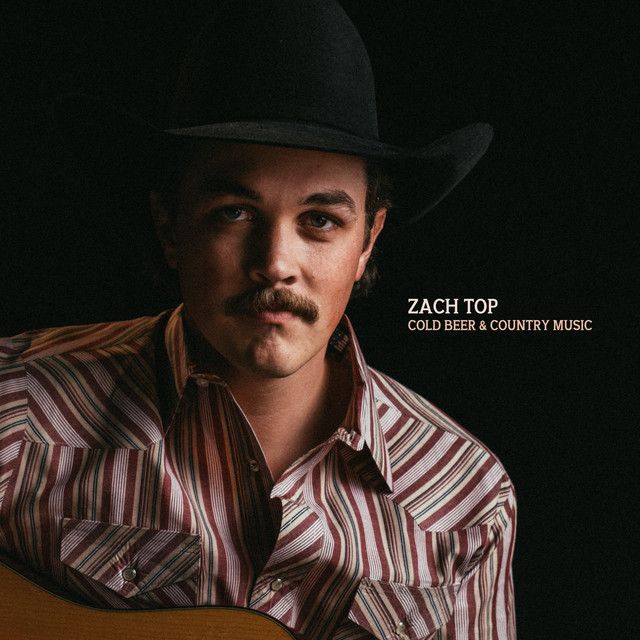
Zach Top is a contemporary country artist, but his musical DNA is straight out of 1994. Like the best of the 90s traditional country songs, this song makes me want to drink beer and go line dancing. The lyrics are a tongue-in-cheek bingo card of country tropes: Chattahoochee, mullets, steel guitar, a final resting place at a juke joint, neon, the list goes on. The ghost of Joe Diffie must have been in the studio that day.
This feels like a classic to me because it reminds me of when country music was fun. It’s infinitely throwback-y, but in a way that honors the folks who were making it the first time around, a loving pastiche of a style that is a staple around summertime pools and watering holes. I know absolutely nothing about this artist, I just know this song, and that’s the marker of a good classic: the music speaks for itself. I think we’ll still be listening to this on jukeboxes in 30 years – if those still exist, at least.
Which artist do you and your parents both enjoy?
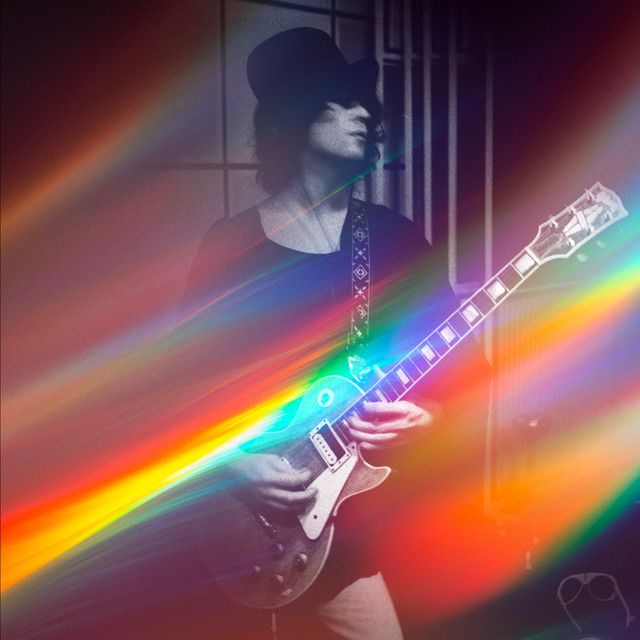
Neither of my parents are album people, nor do they particularly gravitate toward any certain artists. They’re radio people who spun their 45s until those lost their definition and fidelity, a true worn out record. But my dad had a number of CDs when I was a kid, expensive in those days, and one that he’d spent his money on was T. Rex’s Electric Warrior.
It’s not surprising, seeing as T. Rex really only broke into the US with this album, a defining moment of glam rock, though I didn’t understand it this way at the time. I loved that album, and he played it a lot when I was growing up, recorded to a tape he kept in his truck and on the hifi that was in the living room.
When I got my driver’s license, I took this CD to keep in my car, something that felt like a cool secret to those around me. Eventually, he was looking for it and I had to admit I’d “borrowed” it for an extended period of time, but he didn’t mind. I gave it back when I went to college, long after I’d ripped MP3s for my iPod, to keep with me for the long run, eventually purchasing the album in 2x45LP and a singles box set and funnily enough, a new CD to keep in my car again.
Beyond the songs she picked for this week’s prompts, Lindsay also shared a little more about the experiences, artists, and sounds that shaped her relationship with music.
What did you grow up listening to?
I grew up listening to a hodgepodge of music, but it was always on in our house. At any given point, one of the following may have been playing in our house: country music ranging from traditional to modern, disco, funk, radio rock, 60s garage, 60s soul, rockabilly, and more. The first tape I remember getting in my Christmas stocking was Diamond Rio, and I loved 90s country. My parents would record videos off of CMT and we watched those tapes over and over. I loved The Monkees as a kid, and I think they were my first real favorite band. I knew all the members, their tv personalities, who sang which song. As a kid, my mom was constantly watching an E! True Hollywood Story, Behind the Music, Pop Up Video, and I Love the 70s/80s/90s, plus we had a bookshelf full of music books, and I would read anything in front of me, so I spent a lot of time trawling through those. This gave me a hell of a base of music knowledge before I even had the opportunity to listen to a lot of it.
It’s funny, my parents were always listening to music, but the second I started getting a bit of autonomy toward listening to my own music, I rebelled and went in the opposite direction. As I grew into tween years, I did go through the boy band / Spice Girls / Britney phase (as any millennial should, honestly), and I listened to the pop radio station, which featured R&B and rap much more prominently than it had ever been played in the house. At some point, I started carrying a Discman around everywhere, even in the car with my parents, and had a pleather sling bag that could perfectly carry it and a couple of CDs. Shout out to Sony’s G-Shock anti-skip technology from the early 2000s.
Did you ever go through any specific music phases or periods where you were particularly obsessed with an artist, genre, or sound?
During my sophomore year of high school, a kid in class burned a 2-CD Led Zeppelin compilation for me. I knew the radio hits through my dad’s shop stereo being on at all hours of the day, but neither of my parents really listened to them, so I hadn’t had the opportunity to hear some of the deeper cuts. I’d already been on a bit of a journey getting into music, but Zeppelin threw me off into the deep end. I don’t know what it was exactly about Zeppelin that drew me in, but it was probably some kind of alchemical magic.
I was obsessed. I ended up buying all of the albums on CD, the live material, and the DVD set. I got into vinyl at this time, and bought the studio albums plus anything live or solo I came across. I became a vault for facts. I could tell you which songs they played on in their session days. I could tell you which year a photo was taken based on hair and clothes. My fun fact in my high school yearbook was that I could name all their songs in order. Looking back at myself, I cringe, but it made me happy, a sanctuary of sorts for a teenager to retreat into who was too scared to actually rebel.
I became pretty snobby about the music on the radio and wouldn’t listen to anything made after 1992. I spent two years listening to classic rock and 70s music, truly the epitome of that Onion article about the kid raised on music that was entirely out of touch with her generation.
I still love Zeppelin’s music, though not as frighteningly intensely, and have the gift of age and perspective that make me approach at arm’s reach. I think their music was a north star of sorts for me to expand my tastes for a while - does this artist play blues, do they have a booming drummer, do they have the light-and-shade, were they in a magazine with a new artist I haven’t listened to? This is how I found The White Stripes, which was the real moment I opened up to broader genres, and are still my favorite.
Was there a moment, experience, or discovery that changed the way you listened to or experienced music?
By the time 1989 by Taylor Swift was released, I’d spent a decade being a Music Person who refused to listen to pop music. I’d expanded my tastes to include a sampling of electronic music, and the reports were that Taylor had been experimenting with that realm, so I put 1989 on my iPod and welcomed pop music back into my life. I’d been denying myself a genre that was genuinely fun. I finally got over this restriction that I thought gave me some sort of music nerd cred, but it wasn’t affecting anyone except myself.
I loved pop growing up. I loved Paula Abdul and Cher and Britney and many of the artists connecting the dots between them. I loved disco. 1989 reminded me of that, and in doing so, changed the way I bought and experienced music, without the self-criticism or judgment for enjoying pop. I like to joke that 1989 made me pull my head out of my own ass, but I did let myself have something fun, and in doing so, I opened another door for something else to love.
Tell us about an artist who became especially important to you.
I came to Hayley Williams’s solo work during the pandemic with the release of her second album in 2021. Late by most accounts. I was of course familiar with Paramore, but hadn’t been a die hard fan at their peak because pop-punk isn’t a genre that I typically gravitate toward, so I approached her solo work without years of context or fandom. Those first two solo albums were a hard departure from the work she’d done with the band, an art pop unraveling of the knot that had been years of trauma, PTSD, and depression, healing on her own terms.
At the time, I had been experiencing an exceptionally horrible manifestation of endometriosis that led to pain so intense that merely sitting in a chair would make me cry. I have had to take cautious care of my mental health for much of my adult life, and pain made it worse. And in addition to the horror of the news every day, a number of other personal things were happening at the time, too; my parents were divorcing and it was ugly, my last grandparent had died at the beginning of the pandemic, I hadn’t been home for over a year at that point and I was desperately homesick. I retreated into her two solo albums, especially the first, Petals for Armor.
The way she writes about the ordeal of being a woman in your thirties (aside: we are the same age) who has Seen Some Shit is razor-sharp, accurate, and harrowing without being maudlin. She confronts it, she comes to terms with it, she moves past it. She finds power in a feral femininity, in her own company, and in sharing joy with another. I also found her albums incredibly accessible, as her work touched upon genres that are closer to what I already loved: experimental rock, trip-hop, 80s-influenced pop, and acoustic-driven indie folk. And of course there’s her gorgeous, powerful voice.
Last year, when she released her latest album, I found she’d once again excavated the experience of being a 36-year-old woman with startling accuracy. She’d written songs that stabbed me in all the places I didn’t even know were tender, picked scabs and confronted her own loss, that lamented her hometown and dissected her religious upbringing.
Her widespread popularity as a solo artist, as evidenced by her two sold-out tours this year, is proof to me that just being a woman existing in this world is hard. We are expected to carry so much for others, to carry so much pain and agony (and for some, life) in our bodies, live with trauma and misogyny and injustice, and thus relate in some way or another to her body of work. She of course has the loyalty of longtime Paramore fans, who have been there for all her lyrical excisions, but I think it’s just as important to see the woman who has come through the other side and is thriving on her own terms.
What are you listening to lately?
Women-led rock: I’ve loved Die Spitz’s EP Teeth for a while now, but I can’t stop listening to it. A UK band called Hot Wax, they’re loud and riffy, more fun than angry. I’ve also been listening to a band called Lime Garden, who bring a lot of those “indie sleaze” vibes imported from 2008.
I’ve been loving Rina Sawayama’s 2020 album SAWAYAMA. It’s a masterpiece, a portrait of her life as a Japanese woman growing up in the Western world (London, to be exact), set to the genres of her millennial youth, including pop, nu-metal, and R&B.
It took me a while to get into the new Jack White album, Frozen Charlotte, but I’ve warmed to it, and “All Alone Again” is perhaps the most Zeppelin he’s ever sounded.
Lindsay is a lifelong music fan whose taste has evolved from teenage classic rock devotion into a broader love of country, pop, and contemporary rock. While Led Zeppelin and The White Stripes remain important touchstones, women-led bands have become a major part of her recent listening.


