
John on The Tallest Man on Earth, The Afghan Whigs, and Hana Vu
From songs that lead to deeper discoveries to albums that hold years of memories, John’s picks reflect a listener who experiences music as both discovery and emotional refuge.
By the end of the work week, John (@sithbertram) has already been thinking about what he wants to bring home. Every Thursday, he watches AFK and The In Groove to see what’s coming out the next day, listens to the records that catch his interest, and makes a list. On Friday, he heads to one of his favorite record stores in Portland, picks up the ones he liked, and starts his weekend by washing the vinyl, changing the sleeves, making a drink, and sitting down to listen without his phone nearby. It’s a ritual he picked up during COVID, when he fell into the online vinyl community and discovered a deeper love for Jazz along the way.
Across the September 7 to 9 prompts, John reflects on three different ways music can pull you closer. One asks about the song that made him look deeper into an artist, leading to a story about discovery, timing, and the unexpected connection between music and healing. Another looks at an album that feels like a journey from beginning to end, opening up a reflection on how our relationship with a record can change as our own lives do. The final prompt turns toward a songwriter he believes deserves more appreciation, becoming a meditation on growing older, understanding yourself, and finding something universal in another person’s words.
Which song made you look deeper into an artist?
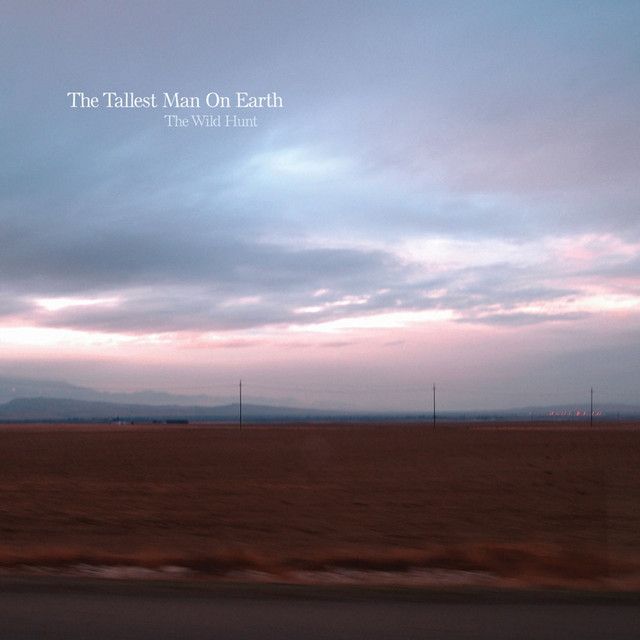
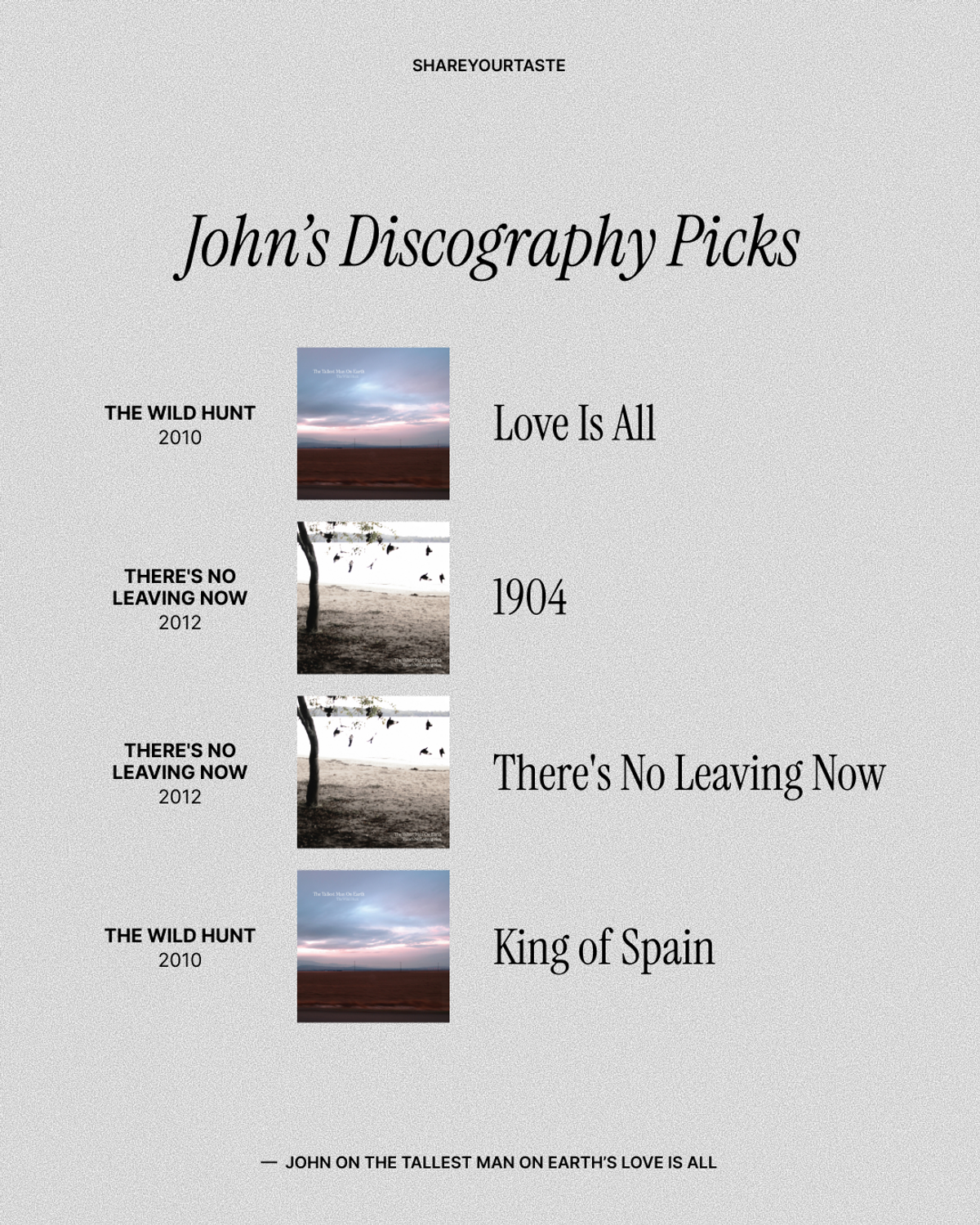
I came across a lovely video made with old home movie footage, and by the end of the song I was in tears. One listen and I was hooked. The song is “Love Is All” by The Tallest Man On Earth. I started my deep dive on YouTube finding a lot of incredible covers, including Paul Simon’s “Graceland,” which he sang with a blistering, guttural-throated exuberance and earnestness that continues to haunt me today. I found the album The Wild Hunt, as well as his debut Shallow Grave, shortly before the release of his third record, There’s No Leaving Now.
This music came into my life as I was struggling with clinical depression. I would sit in the front bay window of my home then, which sat across from a city golf course, and watch the sunset over the manicured lawn as his voice settled a softness into my coping skills.
A few months later he played a short lunchtime set for an intimate crowd at a local radio station. He skipped the meet and greet, which understandably bummed me out. I was getting ready to head home when I saw him exit a side door and chat with his friends in Swedish. I didn’t want to bother him, but my then-wife told me, “John, he is from Sweden, when are you ever going to bump into him on the streets of Portland again?”
We ended up chatting about his songwriting process, mental health and healing. He said he likes to walk in the forest by his home and write songs as the sun sets, that it is fitting his music helps me most at that same time of day. We hugged, he asked me to take a selfie with him, and off we went our separate ways.


Which album feels like a journey from beginning to end?
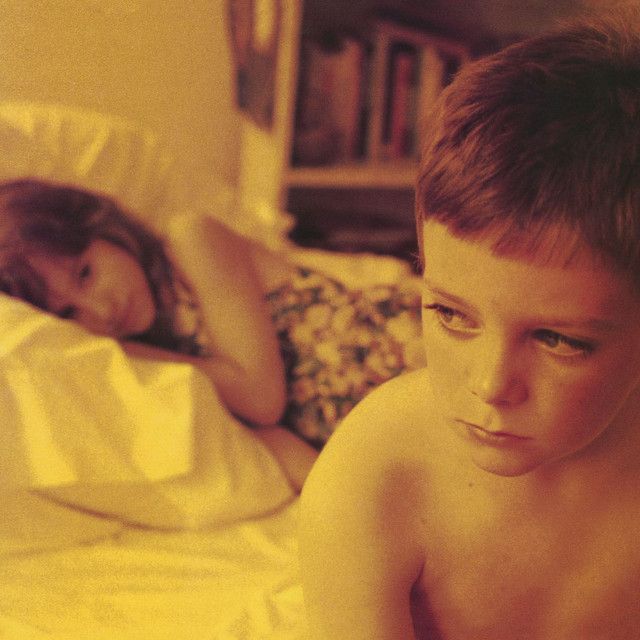
There is an album I was introduced to in college that has been like a movie in my life ever since: Gentlemen by The Afghan Whigs. It plays like a journey into the depths of my emotional life, my feelings of love, betrayal, loss, regret, addiction, as well as the yearning for romanticised eternal love that feels so consuming in your twenties. The loss I feel in these songs has expanded beyond romantic heartbreak to include friendships, people, places, dreams, and versions of myself I’ve had to let go of.
Somehow, the record has grown with me. The journey of the record has become a part of my journey as well. I can put it on loud and dance the grief away. It is dark and wounded and furious, but somehow it also lifts my spirits. Maybe that’s because it never separates loss from love. It reminds me that to have one is to understand the other. I return to Gentlemen because it gives me permission to feel all of the beautiful, ugly, ecstatic, destructive, heartbreaking totality of being human. And after all these years, that still feels like a kind of survival.

Which artist deserves more appreciation for their songwriting?
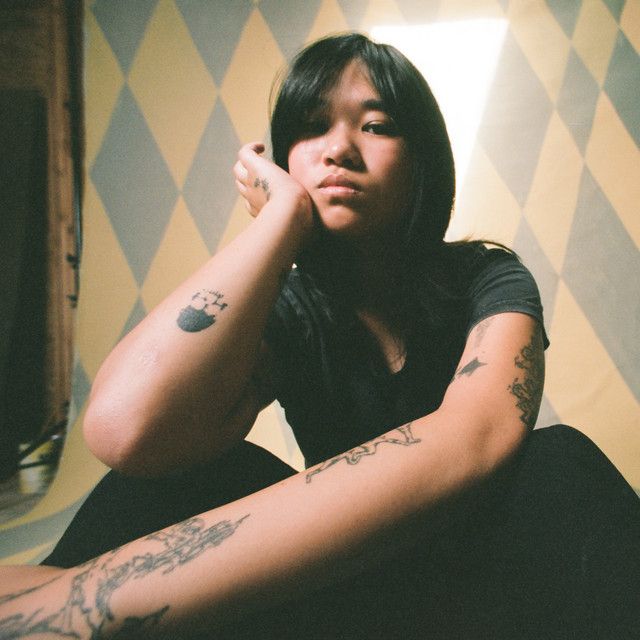
Hana Vu deserves much more appreciation for her songwriting. Not only does she capture a raw, vivid emotional landscape in her music, but her lyrics draw upon the changes life brings in our twenties: love, loss, uncertainty, and joy. She taps into those emotions so instinctively that they transcend age, connecting with the universal joys and sorrows of life through glimmering melodies, joyful pop hooks, and lyrics that can be devastating in their directness. Even when she is writing about deeply personal experiences, there is enough space in her words for the listener to find their own memories and emotions within them.
She also happens to play every instrument on her latest record, the gorgeous Romanticism. To write about the questioning and understanding of life with such elegance and emotional vibrancy is a testament to how far beyond her years Hana Vu’s songwriting feels. There is a timelessness to it that makes her music deeply relatable, as though she is not simply documenting the experience of growing older, but trying to understand what it means to be alive, to love, to lose, and to keep moving forward. And it's fun to dance to!

John was 18 when he finally met his father, a professional piano player who had played with the Kozmic Blues Band, Santana, and Malo before becoming a session player around the Bay Area. One of their early memories was in San Francisco, where John watched his dad play jazz. "I was young, in a city I'd never known, watching a man who looked like me play the most beautiful music with a cast of extras making ends meet. It felt like home," he remembers.
Music has given John other nights too, ones that landed differently in hindsight. There's a story about Blind Melon he still tells. He and his friend Rich caught them at a small venue, maybe 300 people, tight enough that it felt like family in there. Afterward they crossed the street for a beer, and before long they were in the back room playing pool with the band. Not Shannon Hoon though, he wasn't feeling well that night. Hours later, walking out, they spotted him leaning against the tour bus, talking to a couple of women. John and Rich almost went over. They didn't. Just caught his eye and kept walking. Ten days later, Hoon was dead. For John, Blind Melon fills a youthful dream through music that he can only share with his friend Rich.
A father, writer, and record collector whose relationship with music is rooted in connection, from making music with others to spending a quiet Friday night with a new record.


