
The Artist Who Keeps Meeting Me Where I Am
What makes an artist impossible to outgrow? Exploring how Mitski’s music evolves with you over time.
Which artist do you always come back to?

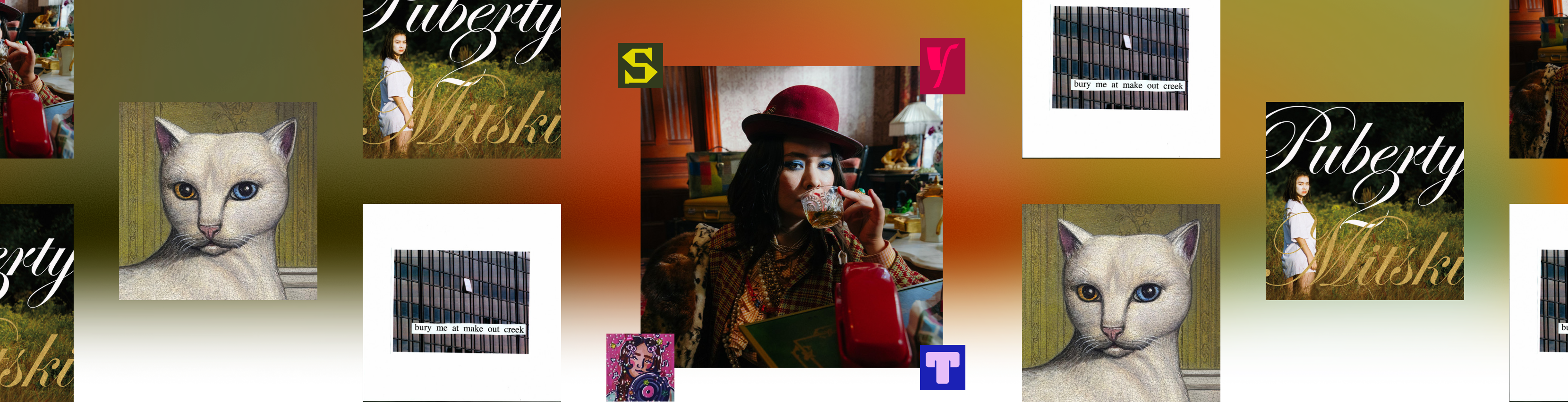
One artist I always come back to is Mitski, as her work has been the soundtrack to a large part of my life. My admiration for her music began many years ago while watching Adventure Time, a Cartoon Network show I had become obsessed with. Her song “Francis Forever” was covered by a character in the cartoon, and upon searching for the origins of the track, I discovered the original. I admired how raw and intimate it felt, like something quietly pulled from within and set gently into the world. It didn’t feel distant or overly produced; it felt personal, almost private.
When dealing with subject matter as broad and complex as grieving someone (or something), its truthfulness and expressive vocal performance offer a deeply relatable perspective. There’s a deep sense of honesty in the way she approaches emotion. The lyrics even read like a diary entry of sorts: beautifully and intentionally written, yet carrying a stream-of-consciousness, confessional quality, as if each line were a thought captured just before slipping away (“I’ve been trying to lay my head down, but I’m writing this at 3 a.m.”). As I listened to her music more and more, my knowledge of her discography expanded, and I began listening to her albums front to back, appreciating the emotional arcs they fostered.
What started in cozy sheets with cartoons illuminating my room turned into car rides, lonely nights, and study sessions. Over time, her music became something that followed me through different phases of my life. A comment I often hear people make about Mitski’s work is that it’s “sad-girl music” (or some variation of that term), and I’ve always felt that was reductive, as her songs are far more multifaceted. While her music explores sadness, it also captures longing, growth, love, identity, and resilience in ways that feel nuanced and incredibly human.
The evolution of her discography is proof that facing difficulties in life doesn’t make your existence flawed.
I associate many of her songs with meaningful moments, such as getting accepted to a school I worked hard to get into, creating some of my favorite works of art, and having heartfelt conversations with strangers. The evolution of her discography is proof that facing difficulties in life doesn’t make your existence flawed. Instead, it shows that pain isn’t permanent, that it moves and shifts, and that things can (and will) get better. The track “Fireworks” off of her album Puberty 2 exemplifies this well: “One warm summer night I’ll hear fireworks outside / And I’ll listen to the memories as they cry, cry, cry.”
Though I’ve greatly expanded my musical taste since discovering her work, whenever I need a reminder of that, I turn her records back on—much like returning to a constant in an ever-changing world. Her music continues to meet me where I am, changing slightly just as I do, but always offering the same sense of sincerity that first drew me in.
As an aspiring artist, I am deeply inspired by the trajectory of her career.
This past February, Mitski released a new record, and somehow, it already feels deeply familiar—wrapped in nostalgia. As an aspiring artist, I am deeply inspired by the trajectory of her career. She comes across as someone unafraid to experiment, and her music radiates an intense sense of confidence and authenticity.
A week prior to the release of her new album, I had the opportunity to listen to it in full. I attended a listening event at my local record store and was impressed by how thoughtfully it was organized. Mitski’s team did an excellent job creating an immersive experience. Although I have attended many similar events, this was by far my favorite, and I found myself wishing it had lasted longer.
Attendees were given a selection of items, including a small notebook for jotting down notes or doodles while listening to the record. These pages were later displayed across participating record stores. I particularly appreciated seeing others’ interpretations of the music, as it created a strong sense of connection and shared experience! For my contribution, I illustrated some of the visuals that came to mind during the listening session. I chose to work exclusively with alcohol markers to preserve the immediacy of my initial reactions, rather than sketching in pencil where revisions would have been possible.
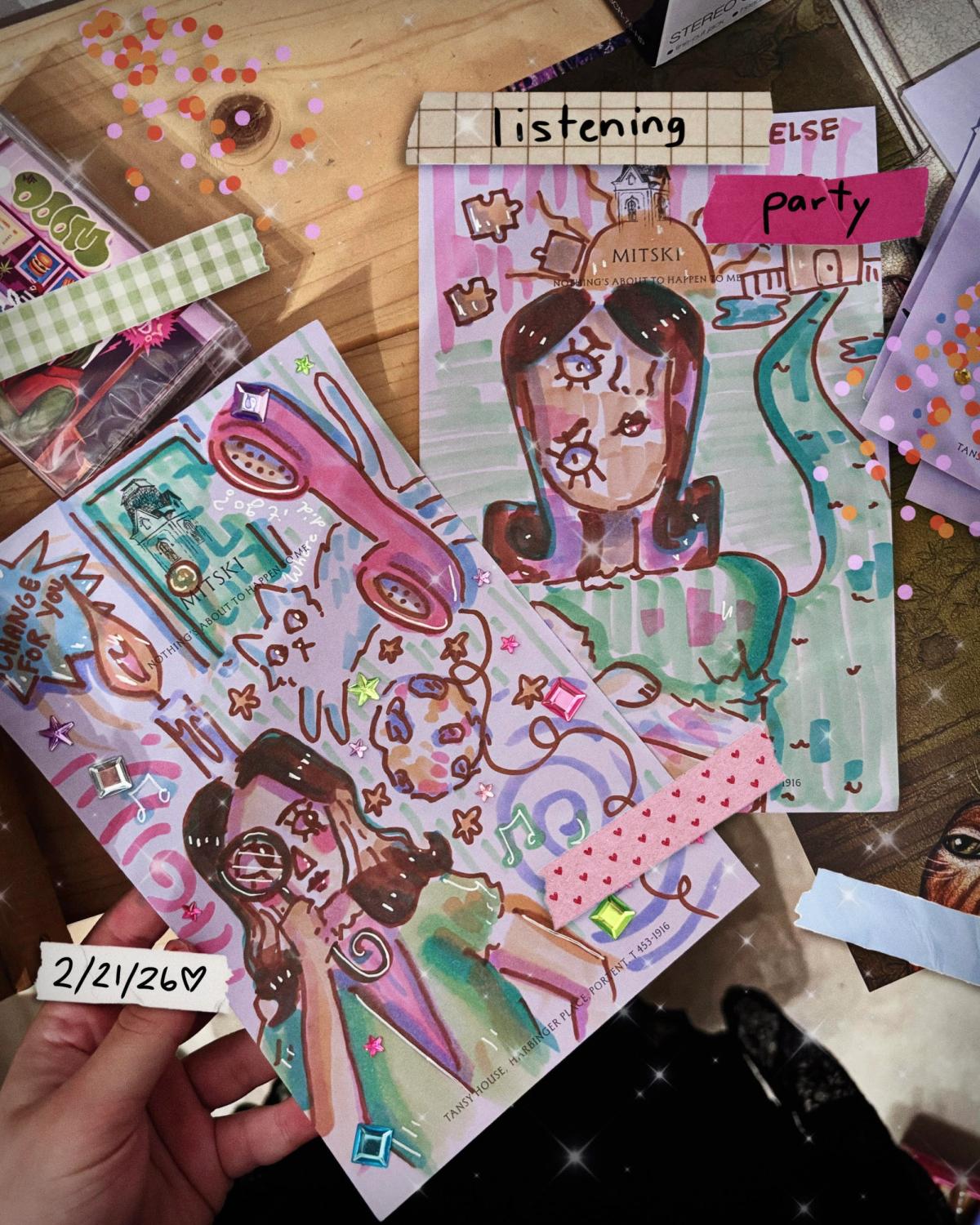
One of my favorite tracks on her new release is “That White Cat,” which, in my opinion, expands on a theme she has previously explored: the fear of impermanence. Notably, however, the song feels sonically fresh and unlike anything she has done before. “My Love Mine All Mine,” from her previous record, is conceptually reminiscent of it, yet “That White Cat” approaches the idea in a very different way. “My Love Mine All Mine” reflects on the impermanence of life in a somber, accepting tone. In contrast, “That White Cat” seems to focus on a more objective, physical kind of impermanence, described through the image of a white cat marking the narrator’s house and claiming it as its own.


This versatility has reshaped the way I see things and keeps drawing me back whenever she releases something new. Even during stretches when I’m not actively listening to her—when I’m caught up in other artists or new music—I always find my way back. Sometimes it’s due to nostalgia. Other times, I’m looking for something to connect with, or just a melody to move to. Whatever the reason, there’s something undeniably special about it.
Check out Jaden’s collection of Mistki in her Instagram post.
A listener drawn to the visceral power of music, how a song can hold a moment or shift perspective. A collector and concertgoer who values the connections music makes possible.


